LAB
Research
From stress signal to coordinated cell-cycle arrest
The Engeland laboratory studies transcriptional networks that determine whether a cell continues dividing or enters arrest. A central focus is the p53–p21–DREAM–E2F/CHR pathway: p53 activates p21, cyclin-dependent kinase activity falls, and RB-family pocket proteins assemble repressor complexes that silence broad programmes of cell-cycle genes. The group combines promoter dissection, genome-scale expression and binding analysis, gene editing, protein-complex biology and quantitative cell-cycle assays to distinguish the contributions of DREAM, RB:E2F and activating MuvB–MYB complexes. Current work extends this framework to BRCA1/2 and DNA-repair genes, A-MYB/B-MYB redundancy, and new assays that track cell death and division in the same population.
01
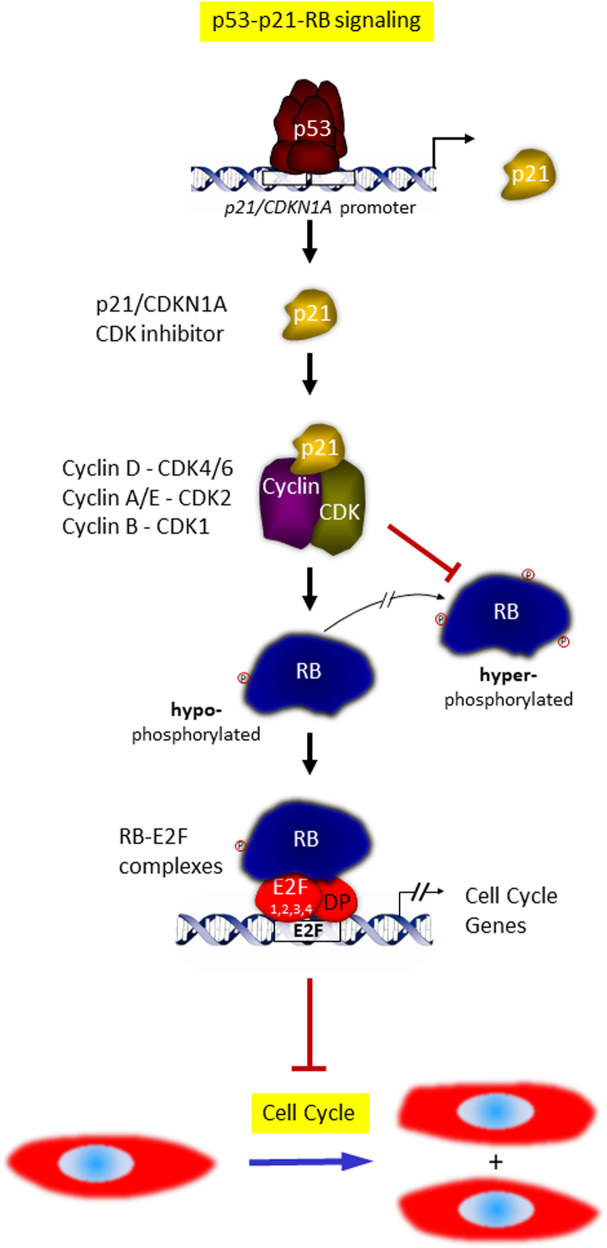
p53–p21–DREAM/RB transcriptional repression
We define how p53 activation is relayed through p21 and pocket-protein complexes to silence hundreds of genes required for cell-cycle progression.
Explore this programme →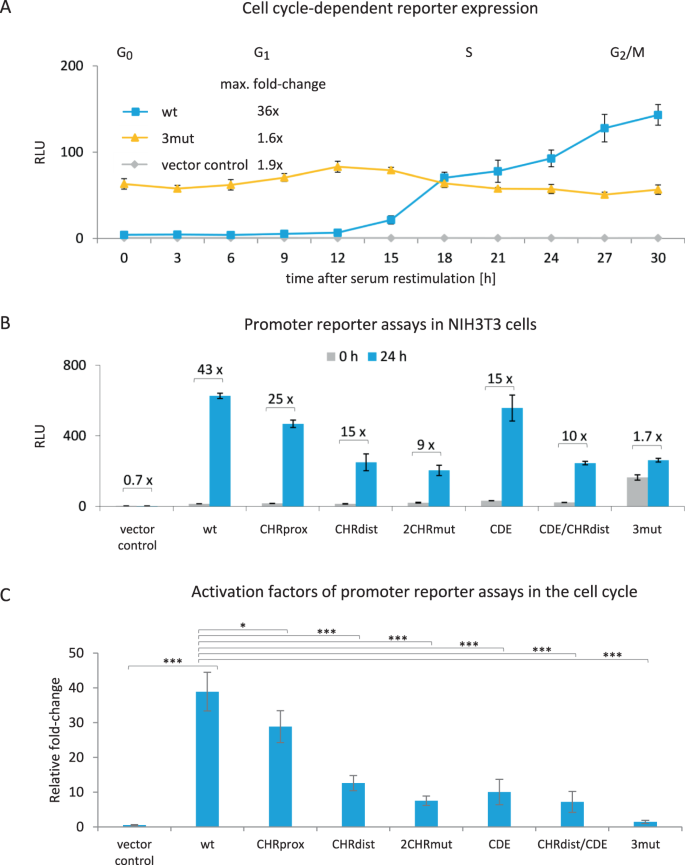
02
E2F/CHR promoter architecture and cell-cycle timing
We investigate how compact promoter elements encode phase-specific repression and activation from G1 through cytokinesis.
Explore this programme →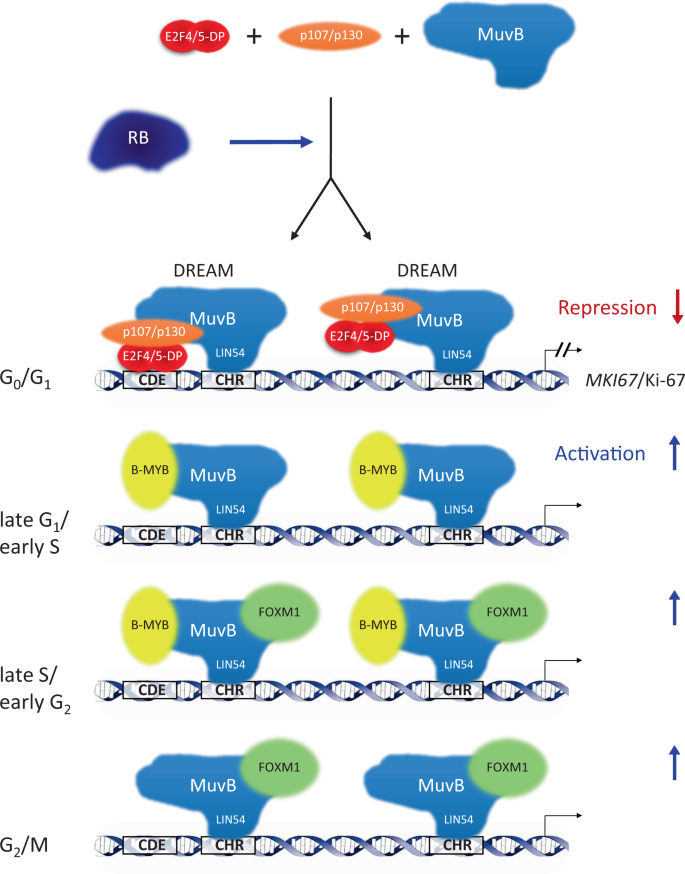
03
MYB–MuvB activation of mitotic genes
We study how B-MYB, A-MYB and FOXM1 engage the MuvB core to activate genes required for G2, mitosis and successful cell division.
Explore this programme →
04
DNA-repair transitions and quantitative cell fate
We connect transcriptional arrest with the selection of DNA-repair pathways and develop assays that measure division and death together.
Explore this programme →